শনিবার, ১২ সেপ্টেম্বর ২০২৬, ০৮:১৩ পূর্বাহ্ন


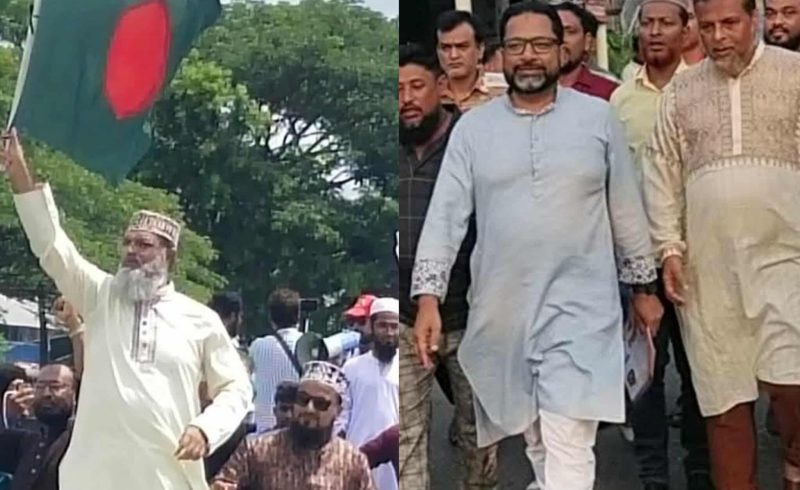

Voters from Nesarabad are leading in the Pirojpur-2 constituency, and the candidates are focusing on Nesarabad (Swaroopkathi).
Crime Investigation Desk: Pirojpur-2 constituency is not just a general parliamentary constituency, but has become a major testing ground for opposition politics. The total number of voters in the 128th constituency of the National Parliament, consisting of three upazilas of Kaukhali, Bhandaria and Nesarabad (Swarupkathi), is more than 3 lakh 84 thousand. The number of male and female voters is almost equal. But the most important thing about this constituency is that about 42 percent of the voters here are from the Hindu community. Due to such a large number of minority voters, the election of this constituency has basically become a fight for minority security, trust and confidence.
In this electoral equation, the two main candidates of the two main political parties have chosen two completely different paths. BNP nominated candidate Ahmed Sohel Manjur Sumon is trying to present himself as a force standing in favor of the liberation war and is trying to convince voters by identifying Jamaat as an anti-liberation force. On the other hand, Bangladesh Jamaat-e-Islami candidate Alhaj Shamim Bin Sayedee is talking about security, coexistence and local relations. He has taken the strategy of reassuring the Hindu community by keeping his father’s political legacy in mind. As a result, two types of calculations have come to the fore in front of the minority voters of this constituency: ideological position on the one hand, and local security and reality on the other.
In this equation, Nesarabad Upazila has emerged as the most important battleground of the entire constituency. Among the three upazilas, Nesarabad had the highest voter turnout in the last election, around 83,000. And at the same time, this upazila has the highest Hindu voter density in the constituency. That is, the candidate who can advance in an organized manner in Swarupkathi will be able to come forward with a big advantage in the entire constituency. For this reason, both the parties, be it BNP or Jamaat, have chosen Nesarabad as their main campaign center. Nesarabad is being given priority in everything from exchanging views with temple committee leaders, local meetings, and office-based worker gatherings.
The biggest strategic truth of this seat is the position of Hindu voters. Although Muslim voters are more in number, there is a high possibility that their votes will be divided. One part of the Jamaat candidate will go for the name of the Sayedee family, while the rest will go for other opposition parties including BNP. As a result, no one will be able to easily reach the 130,000 to 150,000 votes required to win by relying only on Muslim votes. To fill this gap, it is mandatory to get a large portion of Hindu voters on their side. Therefore, this vote bank is no longer just important, but has to be considered as a direct decisive force.
BNP candidate Ahmed Sohel Manjur Sumon’s campaign has an ideological stance on one hand, and on the other hand, there is promotion of local development and social work. He is presenting BNP as the biggest force in favor of the liberation war and is trying to prove that his family is not part of the Jamaat movement. At the same time, by showing examples such as the activities of the foundation established in his father’s name, road repair, eye treatment camps, and assistance to farmers, he is trying to say that he is present in the area not only with slogans but also with deeds. He is also using a big anti-Awami League narrative, highlighting the long-standing disenfranchisement and authoritarian rule, and is trying to bring all opposition sentiments on one platform.
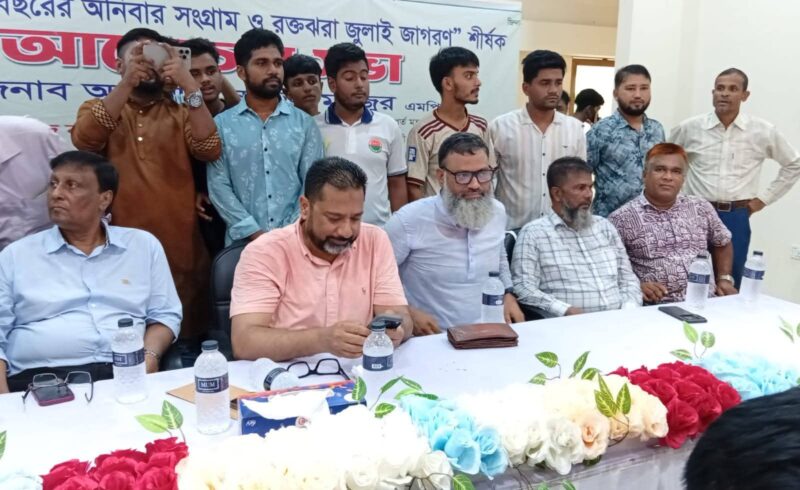
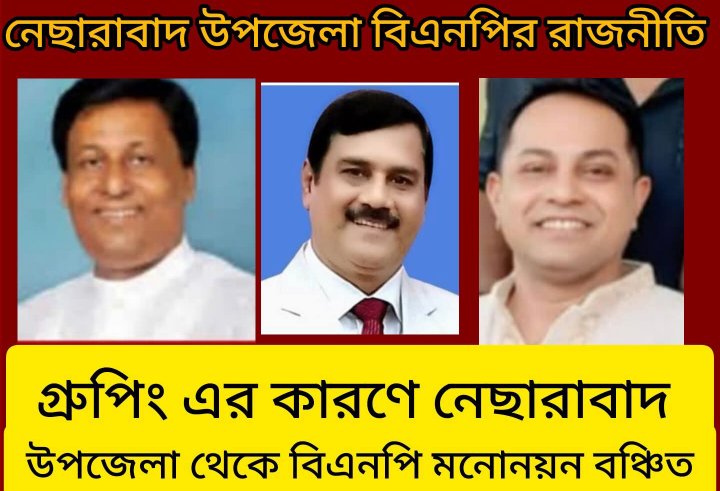
But in the midst of this ideological and developmental campaign, BNP has faced a major organizational crisis. In Nesarabad, two groups’ separate programs at the same time, on the one hand a meeting of the women’s party in support of Sumon, and on the other hand a protest meeting of supporters of another candidate in front of the Upazila Parishad, these incidents clearly portray the party’s division in the eyes of the common voter. Moreover, the opponent BNP group’s sarcasm about Sumon’s family’s electoral ability, calling him a member of a family that has repeatedly lost its deposit in the past, such allegations have directly hurt Sumon’s credibility. As a result, questions are being raised in the minds of field workers and common voters about the candidate’s own ability to win, who is urging others not to waste their votes.
In this situation, the biggest problem for the BNP candidate has become organizational fragmentation. No matter how strong the ideological message is, if party unity is not visible, then many, including the vacillating Hindu voters, will ultimately not want to take the risk. Some may look to Jamaat for security reasons, while others may become reluctant to vote at all. And this voter aversion is the biggest danger for the political party. Because without the active participation of such a large minority vote bank, it will be extremely difficult for any party to fulfill the winning equation.
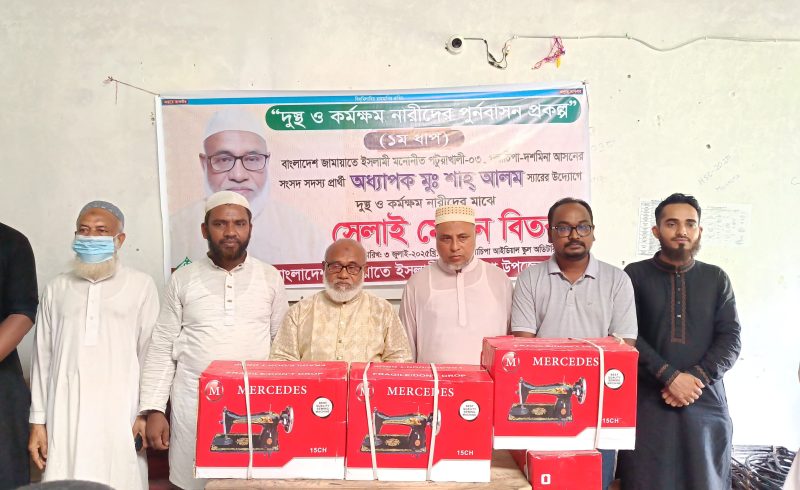
On the other hand, Jamaat candidate Shamim Bin Saeedi has taken a completely different approach. He knows that there is a big controversy about his party at the national level, especially the long-standing allegations about its role in 1971. Nevertheless, at the local level, he is trying to create a new image of his own acceptance by using the language of relationships, security and coexistence. By emphasizing that Hindus, Buddhists, Christians and Muslims are all like one family, he is trying to say that local people should not have to spend the night guarding mosques or temples, that everyone’s lives and businesses should be safe. This language is putting minority voters in a dilemma by bringing up a sense of real security instead of an ideological struggle.
Along with this, he is raising the local reality during the time of his father Delwar Hossain Sayedee. He claims that during his father’s time, Hindus in the area were safe, lived with respect, and there were no incidents of house grabbing or organized torture. Through this politics of memory, he is trying to convey that the family that was able to provide security to everyone locally while in power in the past will be able to provide that security in the future as well. At the same time, he is also trying to interpret the wartime and Pakistan-related allegations in a different way, trying to identify those whom many have called Razakars. This can at least reassure his core supporters and may also create confusion among some wavering voters.
In the whole equation, there are now three options open to Hindu voters. If they want, they can rally around BNP by emphasizing its ideological position and anti-Jamaat arguments, if BNP proves to be strong and united to them. Or, if they want, they can also go for some kind of compromise position with Jamaat based on local security, coexistence and past experience. And the third option is to not vote, which will pose the biggest risk to all candidates in terms of numbers and political influence.
The division within the Muslim vote is also clear. It can be assumed that Jamaat will get a strong organized core vote because of Sayeedi’s name. This vote will affect not only the numbers, but also the field structure, campaigning, transportation, and center-based organization. The challenge for the BNP candidate is to unite the remaining opposition Muslim vote and prove that he is ideologically different from Jamaat and at the same time has the organizational strength to win. The main clash between these two forces will be in Nesharabad, because here, on the one hand, the highest Hindu vote, and on the other, the pressure from both sides will work together.
All in all, Pirojpur-2 constituency now stands at a point where demographic calculations, security psychology, ideological politics and party organizational reality are directly clashing with each other. If BNP cannot quickly overcome its divisions and demonstrate clear and credible unity in Hindu-dominated areas including Nesarabad, then the strategic advantage is likely to gradually shift towards Jamaat. And if political forces can organize themselves at the last moment and restore the confidence of security and representation in the minds of Hindu voters, then this seat will be a real tough fight.